Shipping from China to Ethiopia (2026 Guide): Costs, Transit Time, Air & Sea Freight
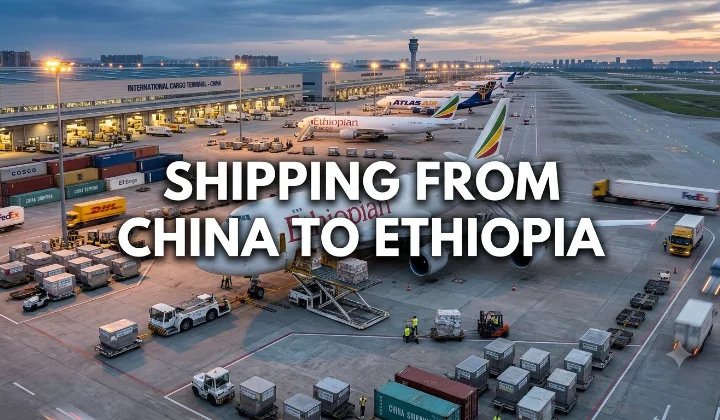
Shipping goods from China to Ethiopia requires careful planning, as Ethiopia is a landlocked country and relies on neighboring ports for ocean freight imports. Choosing the right shipping method depends on your cargo type, delivery timeline, and logistics budget.
For most businesses, air freight is the preferred option because it offers faster transit times and direct access to Addis Ababa, Ethiopia's main international cargo hub. Sea freight is a cost-effective solution for large-volume shipments, with cargo transported to Djibouti Port before continuing by road or rail into Ethiopia.
Whether you're shipping electronics, machinery, industrial equipment, automotive parts, or commercial goods, selecting an experienced freight forwarder can help reduce costs, avoid customs delays, and ensure smooth delivery.
Key Takeaways
- Air freight is the fastest and most commonly used shipping method from China to Ethiopia.
- Sea freight shipments are transported via Djibouti Port before being delivered to destinations across Ethiopia.
- Air freight is ideal for urgent, high-value, or lightweight cargo, while sea freight offers lower costs for large-volume shipments.
- Shipping costs vary depending on cargo weight, dimensions, origin city, shipping method, and seasonal market conditions.
- Working with an experienced freight forwarder helps simplify export documentation, customs procedures, and international transportation.
How to Choose the Best Shipping Method
Selecting the right shipping method depends on the balance between cost, transit time, and cargo characteristics.
| Your Shipping Needs | Recommended Method |
|---|---|
| Urgent delivery | Air Freight |
| Small or high-value cargo | Air Freight |
| Heavy machinery or equipment | Sea Freight |
| Full Container Load (FCL) | Sea Freight |
| Cost-sensitive shipments | Sea Freight |
| Time-critical spare parts | Air Freight |
Air Freight
Air freight is the preferred choice for businesses that require fast delivery, reliable schedules, and reduced inventory lead times. It is particularly suitable for electronics, medical devices, industrial components, automotive parts, and other high-value products.
Sea Freight
Sea freight is recommended for larger shipments where transportation cost is the primary concern. Cargo is shipped from major Chinese ports to Djibouti Port, then transported inland to Ethiopia by truck or railway.
Shipping Methods from China to Ethiopia
Air Freight from China to Ethiopia
Air freight is currently the most efficient shipping solution between China and Ethiopia. Addis Ababa serves as one of Africa's largest aviation hubs, allowing cargo to reach Ethiopia more quickly than many other African destinations.
BSI Global Logistics provides air freight services from major Chinese airports, including Shenzhen, Guangzhou, Shanghai, Beijing, Zhengzhou, Hong Kong, and other international gateways.
Typical Air Freight Transit Time
- Estimated Transit Time: 12–14 days
Actual transit times may vary depending on flight schedules, airline capacity, customs inspections, and seasonal demand.
Air Freight Cost
The current market reference rate is approximately:
- RMB 60–65 per kilogram
Final pricing depends on several factors, including:
- Chargeable weight
- Cargo dimensions
- Product category
- Origin airport
- Fuel surcharge
- Airline availability
Best Cargo for Air Freight
Air freight is recommended for:
- Electronics
- Industrial components
- Medical equipment
- Automotive parts
- Telecommunications equipment
- High-value commercial products
- Samples and urgent orders
Advantages of Air Freight
- Fast delivery
- Stable flight schedules
- Lower inventory costs
- Reduced cargo handling
- Higher shipment security
- Ideal for urgent commercial orders
Sea Freight from China to Ethiopia
Since Ethiopia has no direct access to the sea, ocean freight shipments are transported through Djibouti Port, East Africa's primary gateway for Ethiopian imports. After arriving in Djibouti, cargo continues to Ethiopia via road or railway.
Sea freight is the preferred option for companies shipping heavy equipment, industrial machinery, construction materials, furniture, or large commercial orders.
Full Container Load (FCL)
FCL is suitable for businesses shipping enough cargo to fill an entire container. It offers better cargo protection, faster handling, and lower costs per unit for large shipments.
Common container options include:
- 20GP
- 40GP
- 40HQ
Less than Container Load (LCL)
LCL allows multiple shippers to share container space, making it an economical solution for smaller shipments that do not require a full container.
Sea Freight Transit Time
Typical transit time from major Chinese ports to Djibouti Port is:
- Approximately 22–30 days
Additional inland transportation from Djibouti to Ethiopia depends on the final delivery location and customs clearance process.
Factors Affecting Sea Freight Costs
Ocean freight rates fluctuate based on:
- Shipping season
- Container availability
- Shipping line capacity
- Port congestion
- Fuel surcharges
- Cargo volume
- Origin port in China
For this reason, obtaining a quotation before booking is always recommended.
Best Cargo for Sea Freight
Sea freight is ideal for:
- Industrial machinery
- Construction equipment
- Manufacturing materials
- Furniture
- Heavy cargo
- Large commercial shipments
- Project cargo
Advantages of Sea Freight
- Lower transportation cost for large shipments
- Suitable for oversized and heavy cargo
- Multiple container options available
- Economical solution for long-term supply chains
- Flexible shipping capacity
Shipping Costs from China to Ethiopia
One of the most common questions importers ask is, "How much does shipping from China to Ethiopia cost?"
The answer depends on several factors, including the shipping method, cargo weight or volume, origin city, cargo type, and market conditions. Freight rates fluctuate throughout the year due to seasonal demand, carrier capacity, and fuel surcharges, so obtaining an updated quotation before booking is always recommended.
Air Freight Cost from China to Ethiopia
Air freight is generally charged based on chargeable weight, which is determined by comparing the actual weight and the volumetric weight of the shipment. The higher value is used for pricing.
Current Market Reference
| Item | Reference |
|---|---|
| Shipping Method | Air Freight |
| Transit Time | 12–14 Days |
| Reference Rate | RMB 60–65/kg |
Note: The final air freight rate depends on the shipment details, airline availability, fuel surcharges, cargo dimensions, and seasonal market conditions.
Air freight is often the most economical choice for high-value products where delivery speed is more important than transportation cost.
Sea Freight Cost from China to Ethiopia
Unlike many other destinations, sea freight shipments to Ethiopia first arrive at Djibouti Port, where cargo is transferred for inland transportation to Ethiopia.
Ocean freight pricing consists of two separate parts:
- Ocean freight from China to Djibouti
- Inland transportation from Djibouti to Ethiopia
Estimated Ocean Freight (China → Djibouti Port)
| Container Type | Market Reference* |
|---|---|
| 20GP | USD 4,100–4,500 |
| 40GP | USD 6,500–7,000 |
*Ocean freight rates are indicative only and may change based on vessel schedules, carrier capacity, and market conditions.
For LCL shipments, freight charges are usually calculated based on cargo volume (CBM), making this option suitable for smaller shipments that do not require a full container.
What Affects Shipping Costs?
Several factors influence the total shipping cost from China to Ethiopia.
1. Shipping Method
Air freight offers significantly faster transit but generally costs more than sea freight. Sea freight provides lower transportation costs for large-volume shipments.
2. Cargo Weight and Volume
Air freight is charged by weight, while sea freight is generally charged by container size or cargo volume.
3. Cargo Type
Special cargo such as dangerous goods, oversized equipment, batteries, or temperature-controlled products may require additional handling and documentation.
4. Origin City
Freight costs vary depending on whether the shipment departs from Shenzhen, Guangzhou, Shanghai, Ningbo, Qingdao, Tianjin, or another Chinese city.
5. Seasonal Demand
Shipping costs typically increase before major holidays and during peak shipping seasons due to limited capacity and higher market demand.
Cost Breakdown
International shipping involves more than just freight charges. Understanding the complete cost structure helps importers prepare accurate budgets and avoid unexpected expenses.
A typical shipment from China to Ethiopia may include the following charges:
| Cost Item | Description |
|---|---|
| Cargo Pickup | Collection from the supplier (optional) |
| Export Customs Clearance | China export declaration |
| Documentation | Shipping documents and filing fees |
| International Freight | Air freight or ocean freight charges |
| Fuel & Security Surcharges | Charged by airlines or shipping lines |
| Terminal Handling Charges | Airport or port handling fees |
| Cargo Insurance | Optional but recommended for high-value shipments |
| Destination Charges | Fees at the destination airport or port (depending on shipping terms) |
| Inland Transportation | Transportation from Djibouti to Ethiopia (for sea freight) |
The exact charges depend on the agreed Incoterms, shipment size, and destination.
How to Reduce Shipping Costs
Businesses can often reduce logistics expenses by following a few practical strategies:
- Plan shipments in advance to avoid peak-season surcharges.
- Consolidate multiple orders into one shipment whenever possible.
- Choose sea freight for heavy or large-volume cargo.
- Optimize packaging to reduce volumetric weight.
- Work with an experienced freight forwarder to identify the most cost-effective routing and carrier options.
Transit Time from China to Ethiopia
Transit time is another key factor when selecting a shipping method. Air freight provides the fastest delivery, while sea freight offers better value for large shipments.
Estimated Transit Time
| Shipping Method | Estimated Transit Time |
|---|---|
| Air Freight | 12–14 Days |
| Sea Freight (China → Djibouti Port) | 22–30 Days |
| Sea Freight + Inland Transportation | Varies depending on the final destination and customs clearance |
For ocean freight, cargo arriving at Djibouti Port must complete customs procedures before continuing to Ethiopia by truck or railway. The total delivery time therefore depends on the inland destination and logistics arrangements.
Factors That May Affect Transit Time
Although transit schedules are generally stable, several factors can influence delivery time:
- Flight or vessel schedules
- Port congestion
- Customs inspections
- Public holidays
- Weather conditions
- Peak shipping seasons
- Inland transportation arrangements
Booking shipments in advance and preparing complete shipping documents can help minimize delays.
Air Freight vs. Sea Freight: Which Is Faster?
| Comparison | Air Freight | Sea Freight |
|---|---|---|
| Speed | ★★★★★ | ★★☆☆☆ |
| Cost | Higher | Lower |
| Best For | Urgent & high-value cargo | Large & heavy shipments |
| Shipment Size | Small to medium | Medium to large |
| Supply Chain Efficiency | High | Moderate |
If your priority is minimizing delivery time, air freight remains the best choice. For businesses shipping large quantities of goods where transportation cost is the primary concern, sea freight provides a more economical solution despite the longer transit time.
Customs & Shipping Requirements
Proper documentation is essential for ensuring a smooth shipping process from China to Ethiopia. Incomplete or inaccurate paperwork may lead to customs delays, additional costs, or cargo inspections.
Although documentation requirements may vary depending on the cargo type, the following documents are commonly required for international shipments.
Export Documents from China
For most commercial shipments, exporters should prepare:
- Commercial Invoice
- Packing List
- Bill of Lading (Sea Freight) or Air Waybill (Air Freight)
- Export Customs Declaration
- Certificate of Origin (if required)
- Product Certificates or Licenses (for regulated goods)
Before shipping, it's important to verify whether your products require additional export approvals or certifications.
Import Requirements in Ethiopia
Import customs clearance is typically handled by the consignee or their appointed customs broker.
Depending on the product category, importers may be required to provide:
- Commercial Invoice
- Packing List
- Bill of Lading or Air Waybill
- Import Permit (if applicable)
- Certificate of Origin
- Other documents required by Ethiopian Customs
Requirements may differ for products such as medical devices, food products, chemicals, telecommunications equipment, and other regulated goods.
Common Causes of Customs Delays
Many shipment delays can be avoided with proper preparation. The most common issues include:
- Inconsistent shipment information
- Incorrect HS Codes
- Missing commercial documents
- Inaccurate cargo descriptions
- Customs inspections
- Incomplete import permits for restricted goods
Working with an experienced freight forwarder before shipment can significantly reduce customs-related risks.
Best Shipping Strategy
There is no single shipping solution that fits every business. The best option depends on your shipment size, delivery schedule, and logistics budget.
Below are several recommendations based on common shipping scenarios.
For Urgent Shipments
Recommended Solution: Air Freight
Air freight offers the shortest transit time and is ideal for urgent replenishment, production materials, and time-sensitive commercial orders.
Suitable for:
- Electronic products
- Medical equipment
- Automotive parts
- Samples
- High-value cargo
For Large Commercial Orders
Recommended Solution: Sea Freight
If transportation cost is your primary concern and delivery time is less critical, sea freight provides a more economical solution for large shipments.
Suitable for:
- Industrial machinery
- Manufacturing equipment
- Construction materials
- Furniture
- Bulk cargo
For Heavy Equipment and Project Cargo
Heavy machinery and oversized equipment often require customized logistics planning.
A professional freight forwarder can help coordinate:
- Container selection
- Cargo loading plans
- Export customs clearance
- Port handling
- Inland transportation after arrival at Djibouti Port
For Long-Term Importers
Businesses importing regularly from China can further reduce logistics costs by establishing a long-term shipping plan.
Benefits include:
- Better shipment scheduling
- Improved inventory planning
- Lower transportation costs
- More stable carrier capacity
- Simplified logistics management
Why Choose BSI Global Logistics
Choosing the right freight forwarder is just as important as selecting the right shipping method.
With over two decades of experience in international logistics, BSI Global Logistics provides reliable freight solutions for businesses shipping from China to Ethiopia.
Comprehensive Logistics Services
We provide a complete range of export logistics services, including:
- Cargo pickup across China
- Export customs clearance
- Air freight booking
- Ocean freight booking
- Cargo consolidation
- Cargo insurance
- Documentation support
- Shipment tracking
Strong Air Freight Capabilities
Air freight is one of BSI's core strengths.
We operate through major Chinese international gateways, including:
- Shenzhen
- Guangzhou
- Shanghai
- Beijing
- Zhengzhou
- Hong Kong
Our experienced operations team works closely with leading airlines to provide stable capacity and competitive freight solutions for commercial cargo.
Flexible Sea Freight Solutions
For large-volume shipments, we offer flexible ocean freight services from major Chinese ports to Djibouti Port, supporting both:
- Full Container Load (FCL)
- Less than Container Load (LCL)
We help customers select the most suitable shipping solution based on cargo volume, budget, and delivery schedule.
Professional Export Support
International shipping involves much more than transportation.
Our team assists customers throughout the export process by providing support with:
- Shipping documentation
- Booking arrangements
- Export customs procedures
- Cargo handling coordination
- Shipment tracking and status updates
This allows customers to focus on their business while we manage the logistics process.
Responsive Customer Service
Every shipment is different.
Our logistics specialists provide tailored shipping solutions based on your cargo specifications, helping you optimize transportation costs and improve delivery efficiency.
Whether you are shipping a small commercial order or a full container of industrial equipment, BSI Global Logistics is committed to delivering reliable, professional, and cost-effective logistics solutions.
Real Case Study: Shipping Industrial Equipment from China to Ethiopia
Customer Background
A manufacturing company in Ethiopia needed to import industrial equipment from China for a local production project. Due to the high value of the equipment and the importance of delivery time, the customer required a reliable international logistics solution with professional export handling.
Shipping Requirements
- Origin: Shenzhen, China
- Destination: Addis Ababa, Ethiopia
- Cargo Type: Industrial equipment
- Shipping Method: Air Freight
- Service Required: Export customs clearance and international transportation
BSI Logistics Solution
BSI Global Logistics analyzed the shipment requirements and recommended an air freight solution based on the customer's delivery schedule.
The transportation process included:
- Cargo pickup from the supplier in Shenzhen
- Export customs declaration in China
- Air freight arrangement to Ethiopia
- Shipment tracking throughout transportation
- Coordination with the destination side for smooth cargo delivery
Result
The shipment was successfully delivered within the planned timeframe, helping the customer maintain its project schedule and avoid unnecessary production delays.
This case demonstrates the importance of choosing the right transportation method and working with an experienced logistics partner when shipping commercial goods from China to Ethiopia.
FAQ: Shipping from China to Ethiopia
1. How much does shipping from China to Ethiopia cost?
The cost of shipping from China to Ethiopia depends on the shipping method, cargo weight, dimensions, product type, and departure location.
As a market reference:
- Air freight: approximately RMB 60–65/kg
- Sea freight: varies depending on container size, shipping route, and inland transportation requirements through Djibouti Port.
For an accurate quotation, provide your cargo details, including product name, weight, dimensions, and destination city.
2. How long does shipping from China to Ethiopia take?
Transit time depends on the transportation method:
- Air freight: approximately 12–14 days
- Sea freight to Djibouti Port: approximately 22–30 days
- Sea freight plus inland transportation to Ethiopia: depends on the final destination, customs clearance, and transportation arrangement.
Air freight is recommended for urgent shipments, while sea freight is better suited for larger cargo volumes.
3. Is air freight or sea freight better for shipping to Ethiopia?
The best option depends on your shipment requirements.
Choose air freight if:
- You need faster delivery
- Your cargo is high-value
- Your shipment volume is small or medium
- You need urgent replacement parts or samples
Choose sea freight if:
- You are shipping large quantities
- Cargo weight or volume is high
- Transportation cost is the priority
- Delivery time is more flexible
4. Why does sea freight from China to Ethiopia go through Djibouti Port?
Ethiopia is a landlocked country without direct access to the ocean. Therefore, most international ocean shipments enter through Djibouti Port, one of the main logistics gateways serving Ethiopia.
After arriving at Djibouti Port, cargo is transported into Ethiopia by inland transportation methods such as truck or railway.
5. How can I get an accurate shipping quotation from China to Ethiopia?
To receive an accurate shipping quote, provide the following information:
- Product name
- HS code (if available)
- Number of packages
- Total weight
- Package dimensions
- Shipping origin in China
- Destination city in Ethiopia
- Preferred shipping method (air or sea)
Based on these details, BSI Global Logistics can recommend the most suitable transportation solution and provide a detailed quotation.
Conclusion
Shipping from China to Ethiopia requires careful planning because Ethiopia is a landlocked country with unique logistics requirements. The right transportation method depends on your cargo type, delivery expectations, and budget.
For urgent shipments, air freight from China to Ethiopia provides a faster and more reliable solution. For larger commercial shipments, sea freight via Djibouti Port offers a more cost-effective option.
By working with an experienced freight forwarder, businesses can simplify export procedures, manage transportation risks, and ensure smoother cargo delivery.
With strong experience in international logistics, professional air and sea freight capabilities, and comprehensive export support, BSI Global Logistics helps businesses ship from China to Ethiopia with reliable and efficient logistics solutions.
Contact BSI Global Logistics today to discuss your shipping requirements and receive a customized freight solution.
Related Resources
![Shipping from China to Canada [Updated July 2026 ] | BSI Global Logistics](https://bsiowoss.gotofreight.com/oa/prod/bsi_website/news/20260720/6fff879984d131ef234705eb70dca0d3.webp)