BSI Global Logistics: China-India Air Freight Solution for Cargo Packaging Damage
5 min read. Updated Mar 2026
BSI Global Logistics provides a full-link solution for cargo packaging damage in China-India high-frequency air freight. Solve damage pain points from front-end packaging to end-end operations, with the abnormal rate dropping from 8.5% to 1.2%.
1. Why Cargo Packaging Damage Occurred (Core Pain Points)
For high-frequency air freight from China to India, cargo packaging damage has become a prominent problem affecting cooperation, which is caused by systemic loopholes in the entire transportation link, not a single link error. The specific pain points are as follows:
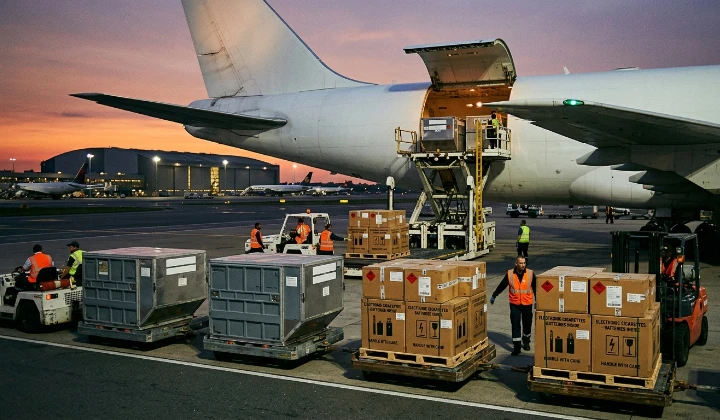
- Inappropriate Front-end Packaging: The original packaging was only suitable for conventional land transportation and could not adapt to the characteristics of air transportation, such as multiple handling and high-intensity loading and unloading. For non-full-pallet shipments, the goods were easily squeezed by heavy goods, resulting in pallet deformation and carton damage.
- Ununified Middle-end Operations: There were differences in the implementation of palletizing standards at airport cargo stations, and there was no image record for loading and unloading operations. The lack of a sound abnormal tracing mechanism led to blurred liability boundaries, making it difficult to locate the root cause of damage.
- Disconnected End-end Coordination: The unpacking and distribution operation standards at Indian destination ports (Mumbai, Delhi) were inconsistent with those at the domestic departure end. Violent unloading at local cargo stations was prominent, and forklift operations were likely to directly damage the outer packaging of goods, which was further aggravated in the secondary handling link.
2. How BSI Solved the Packaging Damage Problem (Full-link Solutions)
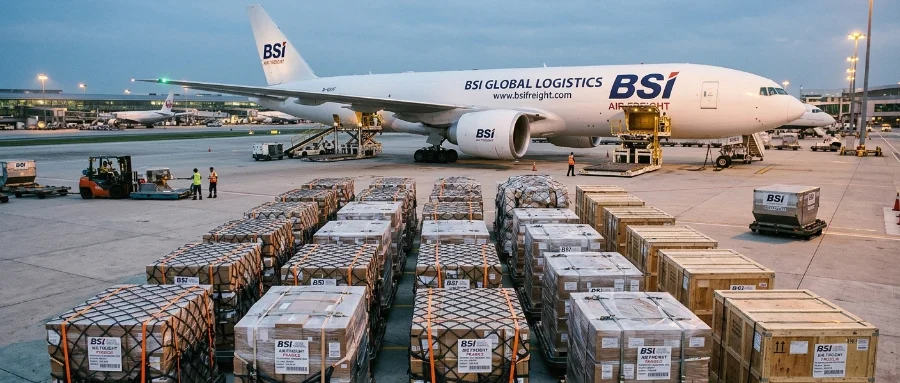
Aiming at the pain points in the entire link, BSI Global Logistics adopted a full-link optimization strategy, focusing on solving the packaging damage problem from the source, process and end, and forming a systematic solution:
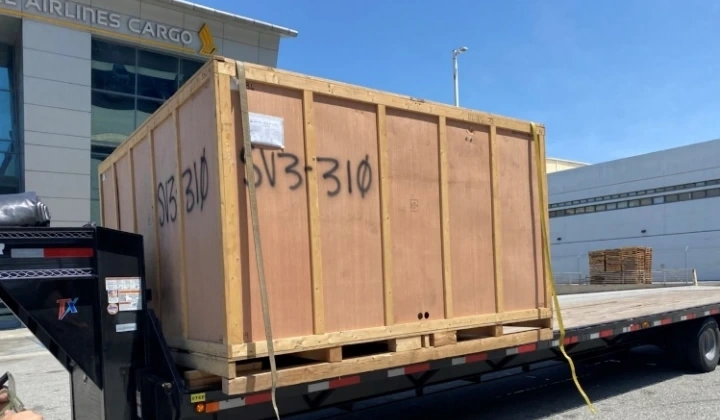
- Front-end Source Optimization: Customized Packaging: BSI communicated in-depth with the customer’s electronic product factory, professionally evaluated the packaging structure, optimized the packaging design according to the air transportation scenario, strengthened the pallet reinforcement and corner protection, adjusted the force distribution of palletizing, and incorporated packaging improvement into value-added services to fundamentally reduce damage risks.
- Middle-end Operation Strengthening: Unified Standards & Traceability: BSI deeply docked with airport cargo stations to unify palletizing and loading/unloading standards, added image retention at key nodes (loading, palletizing, loading), and established an abnormal review and tracing mechanism to clarify liability boundaries and improve process transparency.
- End-end Coordination Management: Standardized Local Operations: At the core Indian destination ports (Mumbai, Delhi), BSI implemented a photo archiving system for unpacking, held special docking meetings with local agents to standardize the unloading process and eliminate violent operations, and unified the operation processes and abnormal feedback mechanisms of the departure and destination ports to reduce secondary damage.
3. Results Achieved (Damage Control Standards)
After months of continuous optimization and implementation, BSI has achieved remarkable results in solving the cargo packaging damage problem of the China-India high-frequency air freight project, reaching the expected service standards:
- The cargo transportation abnormal rate (mainly packaging damage) dropped sharply from 8.5% to 1.2%, and the intact rate of electronic goods reached more than 99%, fundamentally solving the packaging damage problem.
- The operation processes of Mumbai and Delhi ports were standardized, the response efficiency of localized services was improved by 50%, and the processing time of abnormal problems was shortened to within 4 hours.
- The stable monthly shipment volume remained above 100 orders, ensuring the stability of high-frequency transportation and meeting the customer’s demand for multi-batch and continuous shipment.
- The cooperation with customers was further deepened, realizing the upgrade from "single transportation service" to "full-link supply chain service".
4. Explore Shipping Routes from China to India
Related Resources