Air Freight VS Courier Service: 2026 Comprehensive Comparison for B2B Shippers
Understanding the technical differences between Air Freight and International Courier Services (Express) is the key to optimizing your supply chain costs and ensuring smooth customs clearance. While both utilize aircraft, their operational logic and cost structures are fundamentally different.
What Is Air Freight? (The Enterprise Solution)
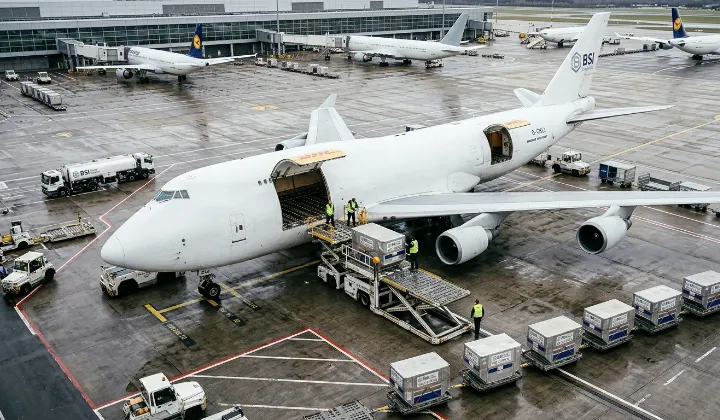
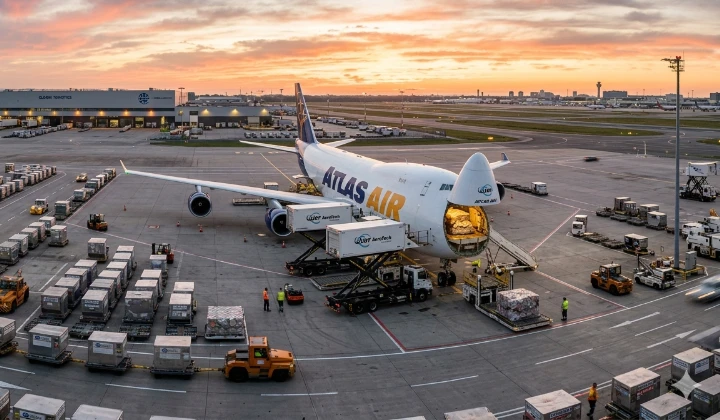
Air Freight is a professional logistics solution designed for high-volume commercial cargo. It involves specialized airlines, ground handling agents, and custom brokers.
- Best for: Shipments exceeding 100kg, palletized cargo, and bulk commodities.
- Customs Model: Supports General Trade (Type 0110), allowing businesses to claim export tax rebates and formal customs documentation.
- Logistics Flow: Usually Airport-to-Airport (A2A), though Door-to-Door (DDP/DDU) can be arranged via freight forwarders.
- Flexibility: High. You can choose specific carriers (e.g., CX, EK, QR) based on transit time or budget.
What Is Courier Service? (The Express Solution)
Courier Service (provided by integrators like DHL, FedEx, UPS) is an all-in-one, door-to-door delivery model designed for speed and convenience.
- Best for: Documents, small parcels, and samples under 45kg.
- Customs Model: Simplified "Express Clearance." The carrier acts as the broker for thousands of small parcels simultaneously.
- Logistics Flow: Fully integrated Door-to-Door. The carrier handles every step from pickup to final mile delivery.
- Pricing: "All-in" rates based on weight zones, but subject to high fuel surcharges and remote area fees.
Side-by-Side Technical Comparison
| Feature | Air Freight (General Cargo) | Courier Service (Express) |
| Typical Weight | 100kg – 5,000kg+ | 0.5kg – 45kg |
| Pricing Logic | IATA pivot weights (Lower per kg as weight increases) | Fixed zone rates (Higher per kg) |
| Customs Entry | Formal Entry (Individual HAWB/MAWB) | Consolidated Manifest Clearance |
| Speed | 5–10 Days (including terminal handling) | 1–4 Days (Direct delivery) |
| Tracking | Milestone tracking (Flight DEP/ARR) | Real-time, step-by-step tracking |
| Packaging | Pallets, Crates, Corrugated Boxes | Envelopes, Small Boxes, Flyers |
Key Decision Metrics: Which Should You Choose?
Scenario A: Choose Air Freight If...
- Cost is the priority for heavy loads: Once your shipment exceeds 100kg, the lower "freight rate" usually offsets the local airport handling fees.
- You need an Export Tax Rebate: If your business requires formal customs stamps to prove exportation for tax purposes.
- The cargo is "Sensitive": For Dangerous Goods (DG), oversized machinery, or high-value items requiring specialized airport security.
Scenario B: Choose Courier Service If...
- Time is critical: You need a sample delivered from Shenzhen to New York within 48–72 hours.
- Low operational complexity: You don't want to deal with multiple parties (truckers, brokers, airlines). One tracking number does it all.
- Low weight: For shipments under 45kg, the minimum charges of air freight make it economically unviable compared to express.
Frequently Asked Questions
Q1: Is Air Freight always cheaper than Courier?
Not necessarily. For shipments under 45kg, Courier is usually cheaper due to the high "Minimum Charge" and documentation fees associated with Air Freight. The "Break-even point" is typically around 65kg–100kg.
Q2: What is the "Chargeable Weight" in Air Logistics?
Both methods use a Volumetric Weight calculation. For Air Freight, the ratio is typically 1:167 ($L \times W \times H / 6000$), whereas Courier often uses 1:200 ($L \times W \times H / 5000$). Always calculate both to avoid unexpected costs.
Q3: Can Air Freight handle Door-to-Door delivery?
Yes, but it requires a freight forwarder to manage the "last mile" trucking and customs brokerage. Unlike Courier services, these are modular services that can be customized to your specific Incoterms (EXW, FOB, DAP).
Final Conclusion
The choice between Air Freight and Courier Service depends on your volume, budget, and customs requirements.
- For scalable B2B supply chains and heavy commercial shipments, Air Freight offers the most professional and cost-effective route.
- For urgent prototyping and e-commerce samples, Courier Service remains the gold standard for speed.
Expert Tip: If you are shipping between 45kg and 100kg, always ask your logistics provider for a quote on both methods. This "Grey Zone" is where pricing fluctuates the most based on seasonal peak demands.
Related Resources