International Air Freight Size & Weight Limits: 2026 Shipper’s Guide
Yes, international air freight is strictly limited by aircraft type, cargo door dimensions, and floor loading capacities. Understanding these constraints is essential to avoid offloading, unexpected surcharges, or transit delays.
Quick Reference: Air Freight Capacity by Aircraft Type
The most critical factor in determining if your cargo can fly is whether it is a Passenger Flight (PAX) or a Freighter (CAO - Cargo Aircraft Only).
| Aircraft Category | Max Height (Ref.) | Max Weight per Piece | Best For... |
| Narrow-body (e.g., B737, A320) | 80 cm – 110 cm | Under 150 kg | Small boxes, loose cartons |
| Wide-body (e.g., B777, A350) | 160 cm | 500 kg – 1,000 kg | Standard pallets (PMCs) |
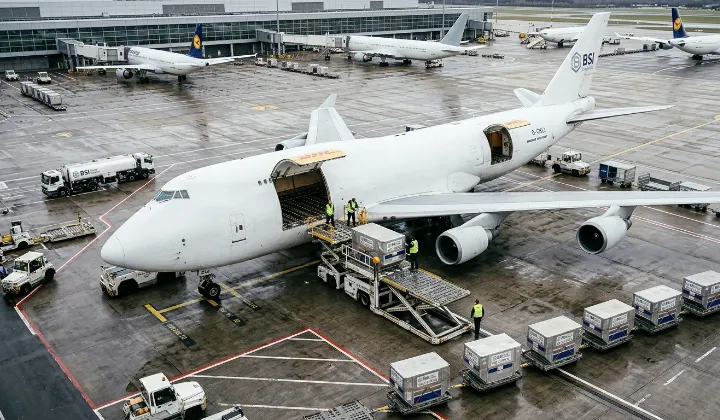
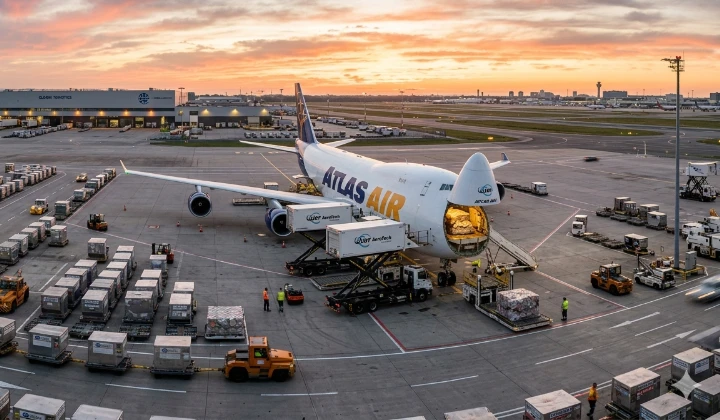
| Main Deck Freighter (B747F, B777F) | 240 cm – 300 cm | Up to 5,000 kg+ | Heavy machinery, oversized crates |
The Three "Golden Rules" of Air Cargo Dimensions
A. The 160 cm Height Limit (The "Pivot" Point)
Most wide-body passenger planes have a maximum cargo hold height of 160 cm (63 inches). If your pallet exceeds this height, it cannot fly on a passenger aircraft and must be booked on a dedicated freighter, which usually involves higher costs and fewer route options.
B. Cargo Door vs. Cargo Hold
A common mistake is assuming that if the hold is 160 cm high, the cargo can be 160 cm. You must account for the Cargo Door Clearance. Most doors require at least 5–10 cm of buffer space to safely maneuver the cargo inside.
C. The Floor Loading Limit (PSI)
Heavy machinery or concentrated weight can damage the aircraft floor. If your shipment is small but extremely heavy (e.g., a solid steel block), it may require "Shoring"—using wooden planks to distribute the weight across a larger surface area.
High-Risk Cargo: When to Pre-Check with Your Forwarder
Always confirm compatibility before booking if your shipment involves:
- Irregular Shapes: Long pipes or curved machinery that don't fit standard ULD (Unit Load Device) patterns.
- Non-Stackable Items: Cargo that cannot have other boxes placed on top (increases "Chargeable Weight").
- Oversized Dimensions: Anything exceeding 300 cm in length or 240 cm in height.
Frequently Asked Questions (FAQ)
Q1: What is the maximum height for standard air freight?
For most commercial wide-body flights, the maximum height is 160 cm. For dedicated freighters, the height can go up to 240 cm or 300 cm depending on the specific aircraft model (e.g., B747-400F).
Q2: Can I ship a 3-meter long crate by air?
Yes, but it requires a wide-body aircraft or a freighter. Long items are often loaded at an angle or placed on multiple pallets (bridging), which requires professional load planning and may incur additional fees.
Q3: How do I calculate the "Chargeable Weight" for oversized cargo?
Air freight uses the formula Length (cm) × Width (cm) × Height (cm) / 6000. If your cargo is oversized but light, you will be charged based on its volume rather than its actual weight.
Q4: What if my cargo exceeds 5,000 kg for a single piece?
This is considered "Heavy Cargo." It requires specialized ground handling equipment (High-loaders) and must be loaded onto the Main Deck of a freighter. Pre-alerting the destination airport is mandatory to ensure they have the equipment to offload it.
Final Verdict: Clear Conclusion
The feasibility of your air shipment depends on one question: Does it fit through the door?
- Under 160 cm: You have the maximum flexibility with thousands of daily passenger and cargo flights.
- Over 160 cm: You are limited to Freighter-only routes, which requires earlier booking and specialized logistics planning.
- Expert Rule of Thumb: Always provide your freight forwarder with the "Length x Width x Height" and "Gross Weight" of your largest individual piece to ensure a 100% accurate quote.
Related Resources