IATA Dangerous Goods Air Freight Guide: 2026 Compliance & Packaging
Dangerous Goods Air Freight: IATA DGR Compliance Guide (2026 Edition)
Shipping Dangerous Goods (DG) by air demands zero-error compliance with the IATA Dangerous Goods Regulations (DGR). For enterprises shipping lithium batteries, chemicals, or medical samples, non-compliance leads to more than just fines—it can lead to total supply chain disruption.
The 9 Classes of Dangerous Goods (Quick Reference)
| Class | Category | Common Examples |
| Class 1 | Explosives | Fireworks, Ammunition |
| Class 3 | Flammable Liquids | Paints, Adhesives, Alcohols |
| Class 8 | Corrosives | Acids, Batteries (Wet), Mercury |
| Class 9 | Miscellaneous | Lithium Batteries, Dry Ice, EVs |
The 5-Step Compliance Checklist for Shippers
1.Identification & SDS Review: Every shipment must start with a Safety Data Sheet (SDS). Check Section 14 (Transport Information) to confirm the UN Number and Packing Group.
2.UN Specification Packaging: Most DG items require "Performance Oriented Packaging" (POP) that is leak-proof and drop-tested. Look for the UN Mark on your outer boxes.
3.The "Lithium Battery" Factor: If shipping Lithium-Ion (UN3480/3481), ensure compliance with Section IA, IB, or II of PI965-PI970. (Note: State of Charge must be 30% or less).
4.Documentation (DGD): You must provide a Shipper’s Declaration for Dangerous Goods (SDDG). This document must be typed, not handwritten, and signed by IATA-trained personnel.
5.Labeling & Marking: Ensure hazard labels are placed on a contrasting background and do not overlap. The Cargo Aircraft Only (CAO) label is mandatory if the items are forbidden on passenger flights.
Common Pitfalls to Avoid
- Hidden DG: Items like "Apparatus" or "Breathing Sets" often contain hidden dangerous components.
- Expired Training: IATA training certificates must be renewed every 24 months.
- Incorrect MSDS: Using an old or generic MSDS for a specific chemical formula will cause customs rejection at major hubs like Shenzhen or HK.
FAQ about Dangerous Goods Air Freight
Q1: Can I ship Lithium Batteries (UN3480) with a 100% State of Charge (SoC)?
Answer: No. According to IATA Packing Instruction 965, Lithium-ion cells and batteries (UN3480) must be offered for transport at a State of Charge (SoC) not exceeding 30% of their rated capacity. Shipping batteries at 100% charge is a major safety violation and will lead to shipment rejection at the airport terminal.
Q2: What is the difference between "MSDS" and "SDS"?
Answer: Historically, they are the same. Under the Globally Harmonized System (GHS), the term "Material Safety Data Sheet" (MSDS) has been simplified to "Safety Data Sheet" (SDS). For 2026 air freight compliance, ensure your SDS is updated according to the latest GHS requirements and includes all 16 standard sections, especially Section 14 (Transport Information).
Q3: Does every Dangerous Goods shipment require a "Shipper’s Declaration" (DGD)?
Answer: Most do, but there are exceptions. Some small quantities of DG (known as "Excepted Quantities" or "Limited Quantities") may not require a full Shipper’s Declaration if they meet specific volume limits per inner packaging. However, they still require specialized marking. Always verify your specific UN Number with an IATA-certified forwarder to see if you qualify for these exemptions.
Q4: Can Dangerous Goods be shipped on passenger aircraft?
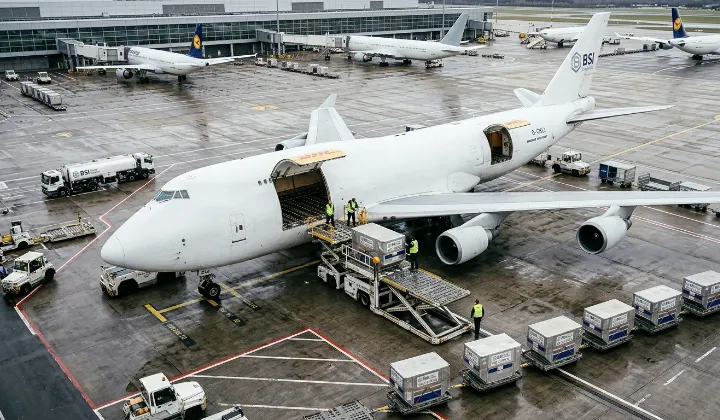
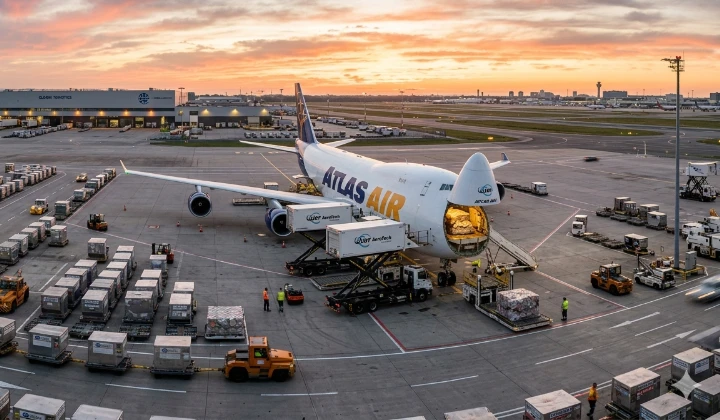
Answer: It depends on the classification. Some DG items are permitted on passenger planes in limited quantities. However, many hazardous materials are strictly "Cargo Aircraft Only" (CAO). These shipments must bear a specific orange CAO label and can only be transported on dedicated freighter aircraft (e.g., B747F or B777F).
Final Verdict: Clear Conclusion
Compliance is not a suggestion; it is a legal mandate. For 2026 air freight operations, the priority is pre-clearance documentation.
Action Item: Before you pack, secure a professional DG Audit of your SDS and packaging. For complex Class 9 shipments (Lithium Batteries), always use a forwarder with a dedicated DG certified team to handle terminal inspections and carrier approvals.
Related Resources