New Energy Export Compliance: Building a Resilient Global Supply Chain
China’s new energy industry is expanding rapidly into global markets. Energy storage batteries, lithium-ion batteries, inverters, portable power stations, solar equipment and other new energy products are increasingly being shipped to Europe, the United States and other international markets.
But international expansion is becoming more complex.
For new energy companies, successful overseas expansion is no longer simply about moving products from a factory in China to a customer overseas. Companies must also consider product compliance, trade regulations, dangerous goods requirements, customs clearance, international transportation, warehousing and last-mile delivery.
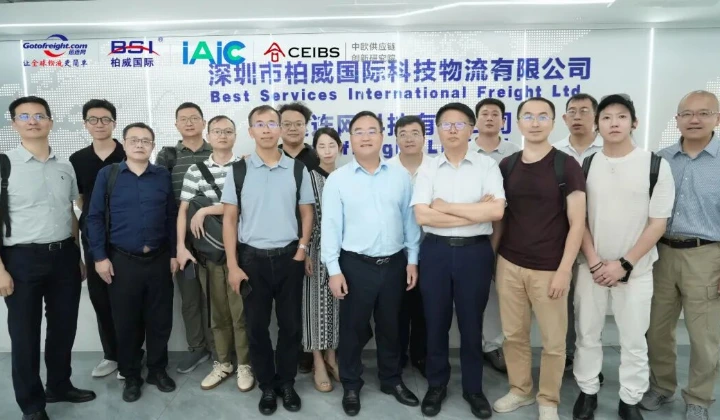
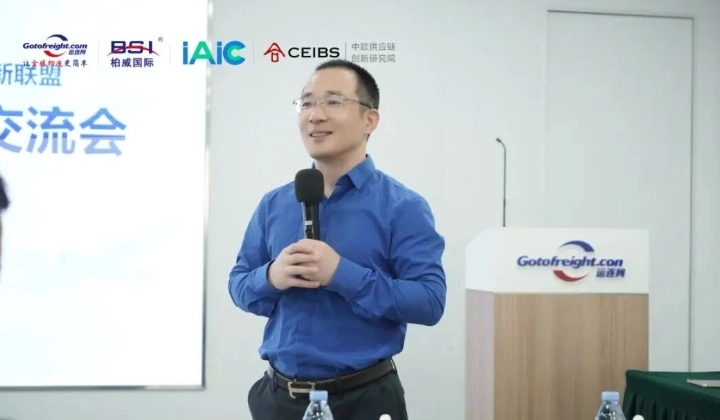
These challenges were central to the New Energy Supply Chain Compliance Overseas Expansion Conference, held on August 14–15 at the Gotofreight · BSI Global Logistics Smart Logistics Park. The event brought together professionals from the new energy, logistics and supply chain, compliance, and digital technology sectors to discuss practical challenges facing companies expanding into global markets.
For BSI Global Logistics , the event also highlighted a broader industry shift:
New energy export is evolving from product delivery to global supply chain management.
From Product Export to Global Supply Chain Management
Traditionally, an international shipment could be viewed as a relatively straightforward process:
Factory → International Freight → Overseas Customer
For new energy products, the supply chain is becoming much more interconnected:
Factory & Consolidation → Export Compliance → International Transportation → Import Customs → Overseas Warehouse → Local Distribution → Final Customer
Each stage can affect the next.
A missing document can delay a shipment. An incorrect cargo classification can create customs or transportation problems. A lack of suitable storage capacity can limit a company's ability to maintain local inventory. And an overly concentrated transportation network can expose the business to disruptions.
As a result, companies expanding internationally need to think beyond freight rates.
They need a supply chain that is compliant, reliable, flexible and scalable.
Three Compliance Challenges New Energy Exporters Need to Address
1. Product and Transportation Compliance
New energy products are not all treated the same way during international transportation.
Lithium batteries, energy storage systems and battery-powered equipment may be subject to dangerous goods requirements depending on their specific characteristics and mode of transport.
Exporters may need to prepare documentation such as UN38.3 test documentation, SDS/MSDS and other transport-related documents, while also ensuring that packaging, labeling and cargo declarations are consistent with the shipment.
The key is to review the cargo before booking and shipping, rather than trying to resolve compliance issues after the cargo reaches an airport, seaport or destination.
2. Trade and Customs Compliance
Product compliance is only one part of the equation.
Companies also need to consider:
- HS code classification
- Export and import declarations
- Country-of-origin requirements
- Duties and taxes
- Import regulations
- EORI and other market-specific requirements where applicable
- DDP and DAP terms
- Destination-country customs procedures
The ability to export a product from China does not automatically mean that it can be imported smoothly into the destination market.
A logistics plan should therefore be developed together with the company's trade and customs strategy.
3. Dangerous Goods Logistics
For lithium batteries and certain energy storage products, transportation and warehousing require additional operational expertise.
The requirements can vary depending on the product, battery configuration, packaging, transport mode and destination.
This is why dangerous goods logistics should be treated as an integrated process covering:
Documentation → Packaging → Booking → Handling → Transportation → Customs → Warehousing → Final Delivery
Rather than as a single “DG shipping” step.
Why New Energy Logistics Requires Specialized Solutions
Different products create different logistics challenges.
For a deeper look at air freight, ocean freight, DG requirements and DDP solutions for inverters, see our Inverter Export Logistics Guide
| Product | Key Logistics Considerations |
|---|---|
| LFP Lithium Batteries | Dangerous goods compliance, documentation, packaging and storage |
| Energy Storage Systems | DG requirements, weight, dimensions and project logistics |
| Portable Power Stations | Battery transport requirements and last-mile delivery |
| Residential Energy Storage Equipment | Ocean/air freight options, customs and local fulfillment |
| Inverters | Product configuration, transport mode and destination requirements |
| Solar & Electrical Equipment | Cargo dimensions, customs clearance and distribution |
There is no single logistics solution that works for every new energy product.
The right solution depends on the product, origin, destination, transport mode and final delivery scenario.
For example, BSI Global Logistics has handled residential energy storage inverter shipments from China and Vietnam to Europe, the United States and India using both ocean and air freight, including DDP door-to-door delivery and Class 9 DG handling where applicable. See our inverter logistics case study for a real-world example.
For example, BSI Global Logistics has handled residential energy storage inverter shipments from China and Vietnam to Europe, the United States and India using both ocean and air freight, including DDP door-to-door delivery and Class 9 DG handling where applicable.
For larger or more complex new energy shipments, project logistics may also be required. BSI's project logistics services cover factory collection, specialized handling, export compliance, packaging, customs and door-to-door delivery for industries including new energy.
Europe: From Importing Products to Local Fulfillment
Europe remains an important destination for Chinese new energy products.
For companies building a long-term presence in the European market, international transportation is only one part of the supply chain.
A more complete model may look like:
China → European Port/Airport → Customs Clearance → European Warehouse → Regional Distribution → End Customer
This approach can help companies move from one-off international shipments toward more predictable local fulfillment.
Warehousing is particularly important for businesses that need to maintain inventory closer to customers or require specialized storage for battery-powered and dangerous goods products.
For companies handling battery products or dangerous goods in Europe, BSI's Poland fulfillment center provides DG warehousing, battery product fulfillment and Europe-wide distribution.
BSI Global Logistics operates warehouses across Europe and other key markets, with capabilities including specialized handling, hazardous-material zones, inventory management and fulfillment.
In Poland, BSI also operates a DG warehouse supporting battery products, energy storage products and other dangerous goods, together with European distribution and fulfillment services.
This creates a potential supply chain structure for European expansion:
China Origin → International Freight → EU Customs → European/DG Warehouse → Regional Delivery
For companies serving multiple European markets, the warehouse can become more than a storage location. It can function as a regional supply chain hub connecting international transportation with local fulfillment.
The United States: Look Beyond Freight Rates
The U.S. is another major market for new energy products, but logistics planning needs to go beyond the transportation rate.
Companies should consider the full landed-cost and delivery picture, including:
- International freight
- Import customs clearance
- Duties and taxes
- Trade policy changes
- DDP/DAP requirements
- Warehousing
- B2B distribution
- B2C delivery
- E-commerce and marketplace fulfillment
For many businesses, the cheapest freight option is not necessarily the most cost-effective supply chain.
A slightly higher transportation cost may make sense if it provides more reliable transit, smoother customs handling, better inventory positioning or faster local delivery.
The right question is therefore not simply:
“How much does it cost to ship?”
but:
“What is the total cost and risk of delivering the product to the customer?”
Supply Chain Resilience Is Becoming a Competitive Advantage
Global logistics networks are exposed to a wide range of disruptions, including port congestion, capacity constraints, route changes, regulatory developments and geopolitical uncertainty.
For new energy companies with rapidly growing international sales, relying on a single route or transportation mode can create unnecessary exposure.
A more resilient supply chain may combine:
Ocean Freight + Air Freight + Rail Freight
with:
Multiple gateways + Regional Warehousing + Local Distribution
The objective is not to use every transportation mode.
It is to have practical alternatives when the preferred route becomes unavailable or commercially unattractive.
This is particularly important for companies managing high-value equipment, project cargo or time-sensitive customer orders.
BSI Global Logistics provides air, sea, rail and road transportation together with warehousing, customs, distribution and dangerous goods services, allowing logistics solutions to be designed around the customer's supply chain rather than around a single mode of transport.
Four Trends Shaping New Energy Globalization
The discussions at the New Energy Supply Chain Compliance Overseas Expansion Conference reflect several broader trends in the industry.
1. From Product Export to Supply Chain Globalization
Companies are increasingly looking beyond international shipping and building overseas warehousing, distribution and fulfillment capabilities.
2. Compliance Is Becoming a Core Export Capability
Product, trade, customs and transportation compliance are becoming part of the market-entry strategy rather than an afterthought.
3. Logistics Resilience Matters Alongside Cost
Companies need supply chains that can adapt when routes, capacity, regulations or market conditions change.
4. Overseas Warehousing Is Becoming a Key Fulfillment Infrastructure
For companies with recurring demand in Europe, the U.S. and other major markets, regional inventory positioning can improve delivery flexibility and customer service.
Digital visibility is also becoming increasingly important, helping companies manage inventory, shipment status and supply chain events more effectively.
How BSI Global Logistics Supports New Energy Companies
BSI Global Logistics provides integrated international logistics and supply chain solutions for companies expanding into global markets.
Depending on the product and destination, services can include:
- China consolidation and origin services
- Ocean freight
- Air freight
- Rail freight
- Road transportation
- Dangerous goods logistics
- Export customs clearance
- Import customs clearance
- European and global warehousing
- DG warehousing
- Distribution and last-mile delivery
- DDP / DAP solutions
- B2B and B2C fulfillment
- Project logistics for complex new energy cargo
BSI's global warehousing network includes facilities across Asia, Europe, North America and other markets, with dedicated zones and capabilities for hazardous materials, oversized cargo and specialized handling.
For European distribution, BSI also provides regional road freight and last-mile delivery, including solutions for hazardous and oversized cargo. (BSI全球物流)
The goal is simple:
Connect the factory in China with the customer overseas through a safer, more compliant and more resilient supply chain.
From Shipping Products to Building Global Supply Chains
The international expansion of China's new energy industry is entering a new stage.
For exporters, the challenge is no longer simply finding a way to move products overseas. Companies need to manage compliance, transportation, customs, warehousing and local fulfillment as parts of one connected supply chain.
Exporting the product is only the first step. Delivering it safely, compliantly and reliably to the end market is what creates sustainable global supply chain capability.
Through continued collaboration with industry, logistics, compliance and technology partners, BSI Global Logistics aims to help new energy companies navigate international markets with greater confidence.
Whether the requirement is lithium battery shipping, energy storage logistics, inverter transportation, European warehousing, U.S. distribution or a broader end-to-end supply chain solution, the right logistics strategy should start with the product, the market and the customer's final delivery requirements.
Frequently Asked Questions
Q: 1. What compliance documents are required for lithium battery exports?
A: The required documentation depends on the battery type, configuration, transport mode and destination. Depending on the shipment, exporters may need UN38.3 documentation, SDS/MSDS, dangerous goods documentation, packaging information and other export or import documents.
A pre-shipment compliance review is recommended before booking transportation.
Q: 2. Can LFP lithium batteries be shipped by air?
A: Some LFP lithium battery shipments can be transported by air if they meet the applicable dangerous goods and airline requirements. The specific battery type, configuration, packaging, documentation and route must be reviewed before booking.
Q: 3. Can energy storage batteries be shipped by ocean?
A: Yes, certain energy storage batteries can be transported by ocean freight, subject to applicable dangerous goods regulations, packaging, documentation, carrier acceptance and destination requirements.
The appropriate solution should be confirmed based on the actual product and shipment details.
Q: 4. Why do new energy products require specialized DG warehousing?
A: Battery and other dangerous goods products may require dedicated storage areas, handling procedures, safety controls and regulatory compliance measures.
A suitable DG warehouse can therefore be an important part of a compliant supply chain, particularly when companies maintain inventory in overseas markets.
Q: 5. Can new energy products be shipped under DDP terms?
A: Some new energy products can be shipped under DDP arrangements, but the feasibility depends on the product, destination, import requirements, tax structure and transportation conditions.
For batteries and other regulated products, the import and logistics requirements should be assessed before selecting DDP.
Q: 6. What logistics services does BSI Global Logistics provide for new energy companies?
A: BSI Global Logistics provides a range of services including ocean freight, air freight, rail freight, road transportation, dangerous goods logistics, customs clearance, warehousing, DG warehousing, distribution, fulfillment and DDP/DAP solutions.
For complex new energy shipments, BSI can also provide project logistics and specialized handling.
Talk to BSI Global Logistics
Planning to export lithium batteries, energy storage systems, inverters or other new energy products to Europe, the United States or other international markets?
BSI Global Logistics can help you evaluate the right transportation, customs, warehousing and delivery solution based on your cargo and destination.
From China origin to overseas delivery, build a supply chain that is compliant, resilient and ready to scale.
Related Resources